Moisture problems inside a crawlspace or basement usually start small but slowly turn into serious damage. Many homeowners look for sump pump installations after noticing damp smells, mold spots, or standing water.
However, water control does not depend on only one system. Internal drains and sump pumps work differently, but both of them play an important role in protecting your home.
Understanding how each one works helps you choose the right protection before the problem becomes expensive.
Let’s uncover and understand this in brief in today’s blog.
Why Should You Choose These Options?
Water problems do not go away on their own or by any DIY. They solely damage wood, flooring, insulation, and even the foundation.
Choosing the right drainage system helps control moisture early and prevents costly repairs later.
According to reports, “moisture content, mold, and the letter n cause health issues, especially for those people who have asthma, HIV, or AIDS.” (source)
Both internal drain and sump pump installations are designed to manage water, but they protect your home in different ways.
- Stop Water Bed or Damage Starts
A proper drainage system collects water and moves it away before it spreads across the crawl space or basement floor; this prevents flooding and long-term structural weakening.
- Prevents Mold and Bad Odors
Standing moisture creates the perfect environment for mold growth; removing water keeps indoor air healthier and eliminates the musty smell many homeowners notice first.
- Protects the Foundation Strength
Water pressure around the foundation can cause cracks over time. Drainage and pumping systems relieve that pressure and help maintain structural stability.
- Improves Indoor Air Quality
Moisture in crawl spaces affects the air inside your home, but controlling water, the entire house becomes drier and more comfortable to live in.
- Save Future Repair Costs
Fixing water damage is always more expensive than preventing it. Installing the right system early avoids insulation replacement and flooring damage.
What is the main difference?
To clearly understand which system protects your home better, it helps to compare them side by side. Both internal drain and sump pump installation deal with water, but their roles, working methods, and levels of protection are different.
The table below explains how each system functions.
| Feature | Internal Drain System | Sump Pump Installation |
| Main Job | Collects and redirects water | Pumps water out of the home |
| How it Works | Channels water along the perimeter into a pit | Removes collected water through a discharge pipe |
| Installation Location | Under the floor along the inside of the foundation wall | Inside a sump pit |
| Type of Protection | Passive water control | Active water removal |
| Prevents Flooding | Reduces seepage but cannot stop flooding alone | It stops flooding by ejecting water |
| Electricity Needed | No | Yes |
| During Heavy Rain | Slows water spread | Completely removes water |
| Works Without the Other | Not fully effective alone | Not effective without water collection |
| Maintenance | Low maintenance | Requires testing and servicing |
| Best Use | Managing ground pressure | Emergency water removal |
| Ideal Solution | Part of the waterproofing system | Final step of the waterproofing system |
What Is an Internal Drain System?
An internal drain system is a water control channel installed along the inside edge of a basement or crawl space floor. Its job is to catch groundwater that enters through the foundation walls or floor joints and safely guide it to one collection point.
Instead of letting water spread across the surface, the system quietly redirects it underneath the floor.
How it Works
Small drainage channels or perforated pipes are placed around the perimeter. When water seeps under pressure, it enters the channel and flows toward the drain area of the sump pit.
Pros of an Internal Drain System
| Pros | Explanation |
| Controls Water Spread | Stops seepage from moving across the crawlspace or the basement floor. |
| Reduces Fecundation Pressure | Relieves hydrostatic pressure pushing against walls. |
| Works silently underground | A hidden system that does not affect usable space. |
| Low Maintenance | No moving parts, so fewer chances of failure. |
| Long-lasting solutions | Once installed properly, it works for many years. |
Cons of an Internal Drain System
| Cons | Explanation |
| Does not remove water outside | It only redirects water, so moisture still exists under the home. |
| Not enough during heavy | Flooding can still happen without sump pump installation. |
| Humidity problems may continue | Damp air can remain and lead to mold growth. |
| Needs another system for full protection | It usually must work with a sump pump to be effective. |
| Limited solution for major leaks | Cannot handle larger water entry or rising groundwater alone. |
What is a Sump Pump Installation?
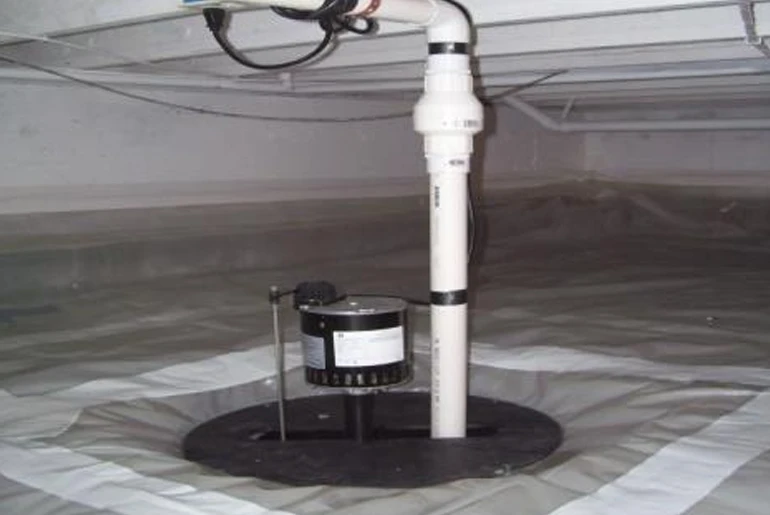
A sump pump installation is a system that actively removes water from your crawl space or basement. A small pit, also known as a sump basin, is created at the lowest point, and whenever water collects outside, it is discharged through a discharge pipe.
Instead of clogging water like a drain, this system eliminates it.
How It Works
Water flows into the sump pit. When the water level rises, the float switch activates the pump and sends the water away from the house foundation.
Pros of Sump Pump Installation
| Pros | Explanation |
| Removes water completely | Pumps collected water outside the home instead of letting it stay underneath. |
| Prevents flooding | Automatically activates during heavy rain or rising groundwater. Keeps crawlspace |
| Controls mold and moisture | Keep crawlspaces and basements dry, improving indoor air quality. |
| Protects foundation and flooring | Stops long-term structural damage caused by standing water. |
| Works in real time | Actually, a system that responds immediately when the water level increases. |
Cons of Sump Pump Installation
| Cons | Explanation |
| Need Electricity | Stop working during power outages without a backup battery. |
| Requires Maintenance | Must be tested and cleaned periodically to avoid failure |
| Installation Cost | Higher initial cost compared to simple drainage channel |
| Noise During Operation | Pump sounds may be heard when removing larger amounts of water |
| Needs Proper Drainage Path | If the water is not guided to the pit, efficiency reduces |
Why Us Your Crawlspace Solutions
Before installing any drainage system, choosing the right ream matters just as much as the system itself. A proper sump pump installation only works when it is designed, placed and treated correctly.
That’s why homeowners prefer working with experts like us who focus on long-term protection instead of temporary fixes.
- Complete Water Control Approach
Your Crawlspace Solutions doesn’t just install sump pump installation systems; they manage the entire water path. From perimeter tile drains to discharge lines, every step is designed to stop moisture before it damages your home.
- Expert Drainage Installation
Their trained team understands how groundwater moves around foundations. Proper placement, slope, and testing ensure the system actually works during heavy rain, not just on installation day.
- Long-Term Protection, Not Temporary Fix
Instead of quick patch repairs, they build systems meant to last. By combining drainage and pumping, they reduce mold risk, wood rot, and structural weakening over time.
- Cleaner & Healthier Indoor Air
A dry crawlspace means less humidity entering your living area. Their solutions help reduce musty odors, allergens, and moisture-related air quality problems.
- Stress-Free Service Experience
Clear communication, proper testing, and reliable installation make the process simple. You get a safer home without confusion, repeated repairs, or recurring water problems.
FAQs
- Do you always need sump pump installation if you have moisture?
Not always. Small dampness can be managed by drainage, but if water collects or returns after rain, sump pump installation becomes necessary to remove it completely.
- Can an internal drain work without a sump pump installation?
It can control seepage, but it cannot remove water from the home. For long-term dryness, most houses require sump pump installation along with drainage.
- How do I know my sump pump installations are working properly?
You should hear it activate during heavy rain, and the discharge pipe should release water outside. Regular testing once a month is recommended.
- How long does a sump pump installation last?
On average, a sump pump lasts 7-10 years depending on usage, maintenance, and groundwater conditions.
- Will sump pump installation stop mold problems?
It greatly reduces mold risk by removing standing water, but combining it with proper drainage and moisture control gives the best protection.
Final Thought
Winter problems rarely fix themselves; they grow into structural damage, mold and costly repairs. A properly planned sump pump installation with drainage protection keeps your crawlspace dry and your home safe for years.
Choosing the right solution with Your Crawlspace Solutions today means fewer worries tomorrow and a healthier living environment overall.